Interloop Consulting’s DEI tool has been created with the aim of assessing an organization’s Diversity, Inclusion, and Equitable culture.
Using this tool, the organization can focus on the key areas required to create a Diverse and Inclusive culture in the workplace.
It will provide organizations with an empirically validated framework to measure and drive employee diversity, equity and inclusion across their operation and help companies unlock the key inclusion opportunities to achieve their business objectives.
Below is the comprehensive list of the diversity dimensions that we have covered to measure the Diversity Index –
Primary Diversity Dimension
Age or
Generational Diversity
Gender Diversity
Ethinicity
Religious Beliefs
Veteran Status
Sexual Orientation
Disability
Secondary Diversity Dimension
Educational Details
Marital Status
Parental Status
Geographic Location
Military Experience
Work Place Diversity Dimension
Job Level
Departmental Level
Work Shift
Work Mode
Work Location
Number of Job Roles
Number of Companies Switched
Number of Past Departments Worked in association with the Organization
INCLUSION
PSYCHOLOGICAL SAFETY
Creating a secure environment where employees feel safe to take risks, ask other team members for help, and more easily discuss difficult problems and issues.
TEAM RELATIONSHIPS
Team members should feel free to share their thoughts and opinions. Everyone works in a collaborative manners and feel they are heard and all ideas are on the table.
MUTUAL RESPECT AMONG ALL PLAYERS
Employees are valued and treated respectfully. This will help to promote a positive work culture where employees are fulfilled, loyal, engaged, and motivated to perform at their very best.
TRUST AND VULNERABILITY
This encourages discussion, open communication and exploration of new paths. It ensures that the organization, the manager, and the employee clearly demonstrate a commitment to create an inclusive culture.
BELONGINGNESS
It is the feeling of security and support when there is a sense of acceptance and identity for a member of a certain group. It gives us a sense of purpose and meaning.
GROWTH MINDSET
This ensures employees are provided with adequate assistance in learning and growth opportunities. It is necessary to stay motivated in the face of the challenges and setbacks of inclusion work.
Creating a secure environment where employees feel safe to take risks, ask other team members for help, and more easily discuss difficult problems and issues.
TRUST AND VULNERABILITY
This encourages discussion, open communication and exploration of new paths. It ensures that the organization, the manager, and the employee clearly demonstrate a commitment to create an inclusive culture.
TEAM RELATIONSHIPS
Team members should feel free to share their thoughts and opinions. Everyone works in a collaborative manners and feel they are heard and all ideas are on the table.
BELONGINGNESS
It is the feeling of security and support when there is a sense of acceptance and identity for a member of a certain group. It gives us a sense of purpose and meaning.
MUTUAL RESPECT AMONG ALL PLAYERS
Employees are valued and treated respectfully. This will help to promote a positive work culture where employees are fulfilled, loyal, engaged, and motivated to perform at their very best.
GROWTH MINDSET
This ensures employees are provided with adequate assistance in learning and growth opportunities. It is necessary to stay motivated in the face of the challenges and setbacks of inclusion work.
Promote fairness with actionable equity strategies
FAIRNESS IN COMPENSATION, TASKS DIVISION, JOB PERFORMANCE, POLICIES
This dimension refers to an employee compensation, division of labor and review system that is fair, objective and free from any unconscious bias.
OBJECTIVITY IN ADVANCEMENT & PROMOTIONS
Organization need to build a fair promotion and advancement practices that are acceptable at all levels, and demonstrated and advocated by leaders at all levels.
REWARD AND RECOGNITION
This is the dimension where employees are acknowledged for their performance. The company has a culture where there is appropriate acknowledgment and appreciation of employees’ efforts in a fair and timely manner.
Creates opportunities to thrive & grow professionally
Higher Empathy leading to better team building
EMPLOYEE WELLBEING
Helps Employees Feel Safe, Respected And Connected
Improves Employee Sense of Belonging
Diversity, Equity & Inclusion
PRODUCTIVITY
High Employee & Organizational Performance
Enhances Employer Branding
Higher Customer and Client Satisfaction
BUSINESS EXCELLENCE
Sustainable Competitive Advantage
Achieves Strategic Business Goals
158%
CUSTOMER TARGETING
Teams are 158% more likely to understand target customers when they have at least one member who represents their target’s gender, race, age, sexual orientation, or culture
73%
DECISION MAKING
Teams with gender-diversity make better decisions 73 percent of the time, compared to 58 percent of the time for all-male team
Why do you need DE&I tool ?
Identifies inclusivity and equitability across the organization
Enables employees to voice out their opinions about workplace culture in a safe environment
Provides a holistic view of Inclusion among 20 groups of employees
Assists the companies to better the internal and external branding of the company from a DEI perspective
Determines the perceptive differences of inclusion between Employees and Top management
Guides companies to unlock the key inclusion opportunities to achieve their business objectives
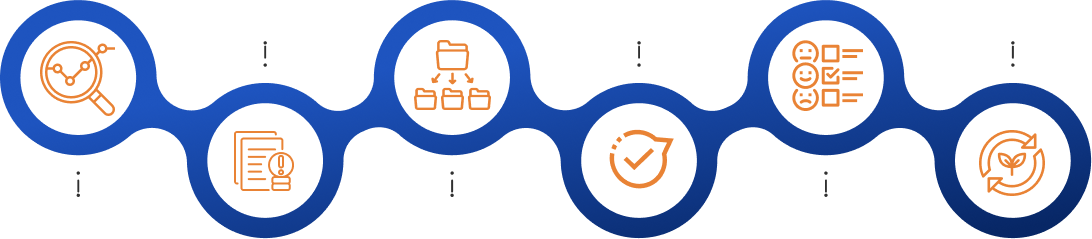
OUR Methodology
02
Defining a problem statement
Identify the critical areas that require implementation of DEI goals
04
Benchmark
Outline the major improvements and focus areas in DEI goals from the previous financial year
06
Sustain
Sustain the impact created with DEI implementation across the organization along with outlining a strategic futuristic course of action
01
Need Analysis
Understanding the current gaps in the DEI goals and objectives
03
Data collection
Understand employee expectations from the collated survey results
05
Evaluate
Develop customized score cards highlighting insights about DEI from all levels and generating customized stakeholder scorecards
01
Need Analysis
Understanding the current gaps in the DEI goals and objectives
02
Defining a problem statement
Identify the critical areas that require implementation of DEI goals
03
Data collection
Understand employee expectations from the collated survey results
04
Benchmark
Outline the major improvements and focus areas in DEI goals from the previous financial year
05
Evaluate
Develop customized score cards highlighting insights about DEI from all levels and generating customized stakeholder scorecards
06
Sustain
Sustain the impact created with DEI implementation across the organization along with outlining a strategic futuristic course of action
Service offerings
DECODING DEI
Using Simpson Diversity Index methodology and covering 29 total dimensions of Diversity, Equity, and Inclusion
HR Score Card is generated with DEl pillar scores mapped with each HR function
Diagnostic approach is used to identify areas of improvement
Metrics defined under various HR functions are mapped with DEI survey questions
Diagnostic approach is used to identify areas of improvement
ORGANIZATIONAL IMPACT MEASURMENT
Interloop Consulting has identified key metrics which are majorly influenced by how effectively the DEI strategy is implemented across the organization.
These are classified under four major touch points:
Employee Engagement
Engaged employees deliver
57%
more effort than uncommitted ones
Businesses with diverse teams tend to see greater engagement, innovation and productivity. Source : ADP Article
Did you know?
Job Satisfaction
EMPLOYEE ENGAGEMENT
Employee Net Promoter Score
(e-NPS)
Internal Brand Perception
DIVERSITY, INCLUSION & EQUITY SCORE CARD
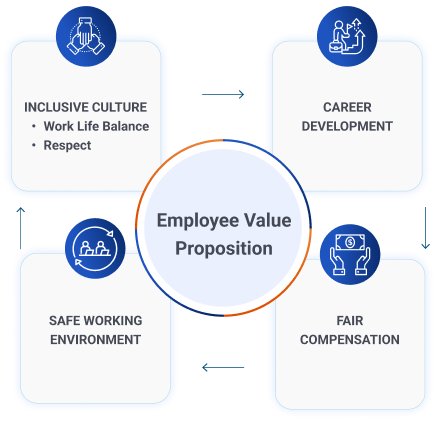
Employee Value Proposition
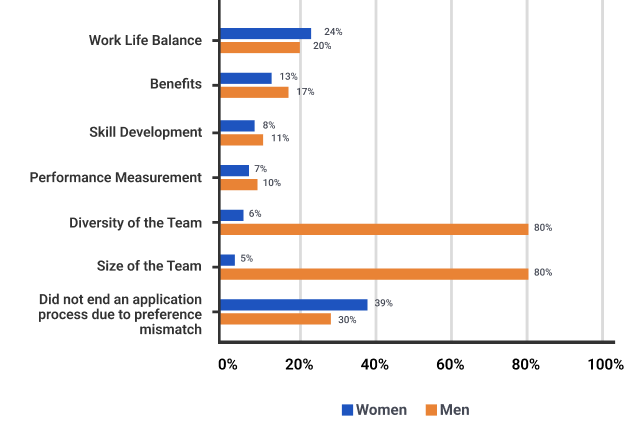
GARTNER STUDY : Women are more likely than men to discontinue an application process in Recruitment for only one reason: Work-life balance
Did you know?
Happiness Quotient
81%
Employees who feel they work in an inclusive culture, 81% said they are happy in their jobs
46% – 58%
Employees who feel they work in an inclusive culture, 81% said they are happy in their jobs
26%
Employees who feel they work in an inclusive culture, 81% said they are happy in their jobs
Did you know?
Happiness Quotient
Fair & Healthy Management
Communication Strategy
Professional Growth
Appreciative Leadership
Employee Satisfaction
“Inclusion is a key factor in boosting employee satisfaction & performance” – SHRM Research Source: ICMI article
BUSINESS IMPACT Measurement
DEI business-driven metrics are an indicator of the state of DEI efforts at your organization. It helps your organization assess DEI outcomes and progress.
We have defined 8 Business Impact Metrics that will help us to diagnose the previous year’s business outcomes with the current year. Basis on the data, a detailed plan of action can be formulated.
Retention
Productivity
Talent Attraction
Promotion offers
Customer Satisfaction
Profitability
Creativity
Innovation
Retention
Talent Attraction
Customer Satisfaction
Creativity
Productivity
Promotion offers
Profitability
Innovation
Change in Demographics at all levels
Regularly Track DEI Metrics
Employee Feedback
Improvement in business outcomes
HR Reports Function wise
BUSINESS IMPACT OF AN INCLUSIVE WORK CULTURE
Improves Team Performance upto
30%
Increase in Revenue
19%
More Likely to be Innovation & Agile
6x
More Likely to achieve Business Outcome
8x
Higher Cashflow per employee
2.3x
30%
Improves Team Performance upto
19%
Increase in Revenue
6x
More Likely to be Innovation & Agile
8x
More Likely to achieve Business Outcome
2.3x
Higher Cashflow per employee
Advance your DEI initiatives
Contact us today to learn more about how we can help you achieve your business goals.