

Interloop

Categories
Uncategorized

Change Management: Fails and Successes are a Choice

Being a consulting partner for clients is a privilege. It allows you to experience situations firsthand. As a founder of Interloop (Zoho Consulting Partner), I have worked with 400+ clients on multiple projects, helping them bring changes in Sales and HR functions. We have helped them to automate, improve and sustain these changes. I am sharing my experience from these projects. Much of this is around Change Management. So here they are…..

What is Change Management?
One of my friends says that change management is about managing change in an organization effectively and efficiently at the individual level. For any organization, change is the only way to survive and succeed. With current dynamics, it has never been more important.

Change is a culmination of thoughts and actions. Once thoughts start meeting actions, the result of this synergy is CHANGE.

Leading questions are — Do you know that you need “this change”? What happens if you stop changing? What if you stop acting on the change?

Why does it fail?
Despite knowing the importance, most of these projects fail miserably or at best succeed average. But, why?

There are two questions built into this why. The first question is — When did it start? The second is — Why did it fail?

Timing and intent is the topic of another piece. Let me share what I learnt from these failures or average successes.

The single biggest reason is that organizations fail to own the change. THEY FAIL to ACT on the CHANGE.

There could be many reasons, but they may be clubbed together as follows:

Organisations/People failed to change in time — The biggest mistake is to wait for the time when you are forced to change. Why do so? The organizational leaders must ensure that changes are identified and are carried at the right time and continuously.

Reach of Change Initiative — Any initiative is as good as it is executed. This has been spoken, written and shared millionth times. But do one really follows it? Check if your last mile person knows what his/her role is in this initiative. If they do not know, it is almost sure that your initiative is looking to fail.

Leadership Commitment — Any change, be it in Sales, HR or Finance, is a huge challenge for leadership. Leaders have to display behaviour which is in line with the change. Most leadership teams think that this is a task, a tool meant for people in the hierarchy down the line. They think that they are immune to the changes. WAKE UP — if you cannot do it, nobody will do it. Period. If you cannot change, who will for you?

No Ownership of Change — One has engaged the best consulting partner, best automation vendor, still, everything falls flat. WHY? There is a very simple reason for that — One did not fix the ownership of the change.

Deadlines for Change Related Tasks – Change is not a journey. It is all about you play the game all along. Did you break the change management into smaller tasks? did you set the deadlines for those tasks? If not, you have set the stage for failure. During this journey, milestones should be set in advance. In a way, one must move backwards to move forward.

Setting up for A Successful Change Management (Ensuring Growth)
You can do the following to ensure that your initiatives yield the results:

Find your “Why” for change — Why do you want to change? You have to find the reason(s). These reasons may be industry related or stage related. If you know WHY, what and how will follow.

Communication Channels — Change is big. It is a threat to the most, while an opportunity to some. Prepare a communication plan which involves multiple channels across the organization. “Well Communicated is half-sold”. It is very important that everyone, irrespective of hierarchy, understands and accepts the ownership of their roles.

Leadership Display — Change management is about bringing in culture, setting it right and ensuring that it is forward in nature. Only Leadership has this advantage in the organization because everyone looks up to them. Walk the talk. If you talk about innovation as a theme, display the acceptance or appreciation if someone comes up with an idea.

Set up Ownership — It is a must-have if you want to ensure that things are changed. Identify and establish smaller tasks that help the change initiative. Now set the respective owners for these tasks. It is easier to track and also efficient to move ahead.

One can talk about scientific approaches or global frameworks for change management, however, they are as good as your strong basic understanding of the steps involved.

Submitted by: Saurabh Chauhan

You can connect with me on Linkedin. (https://www.linkedin.com/in/thesaurabhchauhan/).

Interloop Consulting LLP is People and Productvitiy Consulting Firm. We work with you to optimise the people performance and processes to achieve desired growth. Interloop has technology partnership with Zoho and Newgen.


Categories
Uncategorized

Creating Happy Employees

This is one of the many challenges any organisation face today, tomorrow and day after.

Happiness goes beyond satisfaction. It needs minor details to be handled well.

As an employee, I have experienced it as a receiver and and now, as a consulting partner, I am helping many organisations. The journey of happy employee starts much before than he or she is hired. Happy employees are all about their experiences of your organisation. They are like customers those who decides how well your organisation is performing.

Happy Employees create great companies.Happy Employees propagate unconditional growth.

The million dollar question is — “ How do I make them happy?”

The answer is simple and complicated (as is always the case with simplicity). I break it into 7 broad steps through an employee life cycle.

1. It starts right from a carefully drafted job description and your selection process.
This one information depicts how well planned your organisation is. No ones like the ambiguity.

I have received calls from recruiters who could not explain the JD, immediately putting me off. Do you think that you would join such company? It requires a complete involvement of your teams — the manager who wants this candidate, the hiring team who will hunt this candidate, recruiters who will set up the screening interviews and so on…

Also, how well do you treat a candidate during selection process says a lot about organisational culture. During initial days of career, I appreared for many interviews and every organisation differs in this process.

Afterall, before a candidate pitches in, your organisation is selling itself for a suitable talent.

2. Create an outstanding Orientation and On-boarding experience for a new comer
Think carefully — Who is coming on board? A human. Right!

Most organizations makes this process mechanical. Instead making first few days exciting, organizations and related teams just tick the check-boxes.

I have had an amazing experience with one organization. On very first day of joining, everything was on my desk — Access cards, Mobile phone, Deskphone and all needed accessories. Not HR, but the guy from Finance Team who referred me was my buddy for processes. Business Domain Knowledge was 3 days learning on the job. Company presentation was done on 7th day.

Compare this with a boring powerpoint presentation and a guide booklet to read for next two days. I guess that most of us can relate to it.

3. Help them accept and propagate Ownership
Enterprises today need more than 9 to 5 employees — They need business partners.

The difference lies between wasting time and investing time. Does your employee engagement programs, communication and environment creates owners?

Your shared values are immediately open to new employees. Your values define how your employees treat your organisation. Transparent and progressive career path is a must for any employee. If they cannot see the future, they will never own it. It is same as you not investing in an opportunity if there is little growth.

4. Foster an environment of trust, team work and high integrity
I have seen in many places a love for micro-managing their employees. This has gone to an extent that some of them have a culture of managing Time Sheets. Time Sheet is a format in which you need to record your hourly activities of the day. Micro management cannot go beyond this, I guess.

When you do it, you are clearly communicating that you do not trust your employees. You cannot enforce your thoughts, you can only encourage an employee to own his/her game.

How do you do it? — Answer is very simple. You need to give them space where they can take decisions by themselves. Set some protocols where they are free to strategise and execute their plans. Nothing is more empowering than a sense of belongingness. By giving them this freedom, you are creating this connection.

5. Have an action plan on Trainings & Development — A plan which will be implemented.
No one can deny the importance of skill upgradation in this current world.

Unfortunately, all this is much talked, less executed. Or more dangerously, mechanically executed.

Your HR, business functions and training teams need to spend a serious time designing a level and hierarchy based training and development activities. You can also engage external agencies specialized in developing such programs.

In order to prepare future leaders, these programs ensure that Right Knowledge is shared at Right time with Right talent. You can create a Talent Identification Center in your organisation.

6. Engage them beyond their jobs
Your employees convey your identity and values 24X7. Why are you stuck between 9 to 5?

No, it does not mean that you need to invade their family time. Never.

For example, Have you ever tried to create a community of your employees for a social cause, proactively?

Brainstorm and try this.

7. Communicate, Communicate & Communicate
Your values, your vision & missions and your goals need to be communicated to your employees. You can create & share success stories around these points.

Create touch points that employees can relate to. One of my friends shared a ritual in his organisation. Every morning, they will put a Post-it slip on each desk sharing about Value of the day. Similarly in another organisation, employees nominate each other for team work through a notice board in cafeteria. The value here is team work.

All of the above steps can further be broken and developed into wonderful ideas. It is your responsibility to create a happy employee. No one else can do it for you.

Honest Business Solutions is your success partner in Change Management. We focus on strategy and action in three key areas — People, Sales and Leadership. Write to us for a free evaluation at info@honest.net.in or call us at +91–9971718487.

Categories
Uncategorized

How to make wrong decisions and stick to them?

So every one decides. Some are so successful with every decision. They seem to have a Midas touch, turning everything into gold.

While some of us, seem to make decisions which turn out to be wrong and we stick to them for irrational reasons.

Let me help you identify couple of ways to make a wrong decision. (or to avoid them)

You are an egoistic and know-it-all person i.e. You are Biased
You have experienced it first hand once or twice or may be more times or You have seen a friend doing it or worse you saw it in media. You only listen to ideas which conform to your thought process. You have learnt to ignore any other information which challenge your idea of success.Taking into account all facts and careful analysis hurt your ego very badly. Congratulations, you are here to make wrong decisions.

You are your own worst enemy when you wear ear plugs and blindfold all the time.

You are overconfident because you know the future(really?)
As you seem to know everything about future, so there is no need to do any scientific and logical SWOT analysis. It is for lesser mortals. Putting efforts into decision making is for some other person who does not know future. But you do, so almost no efforts.

You are egoistic and overconfident, so now you are trapped in yourself
Here is the part of sticking to wrong decisions. You continue to stick to your decisions though they stopped making any sense long time back, but your ego does not allow you to see it. Your overconfidence has trapped you in this cycle.

You believe that you can make it work by putting your money, time and efforts.

Or you can avoid all this by doing one thing
Just be a Normal Human Being

who requires data, information and knowledge to make a decision &
who is not afraid of asking for help.
Stuck with your decisions? We can help you identify gaps and challenges.

Impact of Wrong Decisions (& sticking to them)

Some of most famous examples

  • Nokia and Android
  • Yahoo and Google Story
  • Apple V/s Microsoft
  • Blockbuster & Netflix
  • and many more…

Moral of the story: Decision making is an art and science. It is much more than gut feeling. It is going beyond your gut feeling and validating it with some data and information. Seek knowledge and apply. But decide, do not stop once you have confidence.

Honest Business Solutions is your success partner in Change Management. For a simple and meaningful discussion, call us or write an email at +91–99 71 71 84 87 and susobhan@honest.net.in

Categories
Uncategorized

Beyond 80%: The Unrealised Power of Going All In

Credit for this image remains with the owner who did it or said it. It was saved in my phone. Although this theory resonates so much with me as a founder and entrepreneur.

Beyond 80%: The Unseen Power of Going All In

This isn’t just about working harder or smarter or sleepless nights; it’s about tapping into that elusive, transformative extra 20% where true magic happens, where sky meets the horizon for you.

That Extra 20%

When most of us stop at 80%, we’re playing it safe and sticking to what’s comfortable. This is linear and humane and expected. The game changer is the final 20% which is all except a linear progression; it’s an exponential leap. This is changing to the next upper orbit. This additional effort goes beyond logical limits, testing our perseverance and willpower. It is the moment when challenges become the gateway to breakthroughs. Few dare to make that leap because it demands more than talent or luck — it requires a blend of passion, relentless drive, and, often, personal hardships that have reshaped our inner world.

Embracing the Pain — A Filter for True Success

This thought asserts, “Pain is the filter. Few pass it.” This statement captures the essence of enduring struggles. It’s in the throes of discomfort that passion is forged. Think of the athletes who push through severe injuries or the entrepreneurs who risk everything in the face of uncertainty. Come back of Usain Bolt or Robert Downey Jr. or Elon Musk, these are not tales of lucky breaks, but testimonials of persistence where temporary pain translates into lasting success. The real game-changer isn’t a sudden burst of inspiration — it’s the willingness to suffer longer than anyone else, turning perceived weaknesses into profound strengths.

Delving Into the Ingredients: Delusion, Obsession, and a Pinch of Trauma

What does it take to muster that final push? A rare combination of delusion, obsession, and sometimes even remnants of childhood dreams or shortcomings. At first glance, these might seem like negative attributes. However, they often catalyze the extraordinary. Delusion here isn’t about losing touch with reality but cultivating an unwavering belief in the face of adversity, tapping into the innards of your own to bring back the courage. Obsession fuels the long nights and relentless persistence that separates the extraordinary from the average. And while trauma is painful, it can also compel us to fight harder, using our scars as maps toward growth and perseverance.

Rethinking Success in a World Obsessed With Comfort

We live in a society that glorifies efficiency and shortcuts. Yet, the most profound triumphs emerge from the refusal to quit when logic suggests retreat. Success isn’t accidental, it is INCIDENTAL as a result of your undying zeal. It’s a product of those who refuse to be satisfied with mediocrity — who choose to endure the pain of the extra grind, turning obstacles into stepping stones. By internalizing the notion that every additional ounce of effort could multiply your results exponentially, we redefine our own potential.

Final Thoughts: Who’s Ready to Invest That Extra 20%?

The call is clear: to achieve monumental success, you must be willing to go beyond the obvious. It’s not for everyone. Only those brave enough to risk it all, to embrace discomfort and transform it into an asset, will unlock the extraordinary rewards waiting on the other side of the table. When you commit to that extra effort, you’re not just working harder — you’re rewriting your story. You are rewriting your legacy. Have a go at it!!!

Categories
Uncategorized

Sales Utopia: The Ideal World Every Sales Rep Dreams Of – And How to Stay There!!!

Ask any great rep what the perfect sales life looks like, and you’ll hear the same dream:

Clean pipeline. Responsive buyers. Momentum that builds. No endless chasing. No ghosting. No burnout.

We call this dream Sales Utopia – and it’s real… for a while.

But it’s fragile. And unless you defend it daily, the grind pulls you out.

Let’s break down the 4 major struggles keeping most sellers out of Utopia – and how to fix them.

1. Endless Chasing, Not Choosing

Too many reps chase everything with a heartbeat. That’s not hustle – it’s waste.

Qualify hard and early. Use frameworks like MEDDIC* / MEDDPICC or CHAMP**. Spend time only where pain, power, and urgency meet. This will free up your time and resources for better and more rewarding work.

2. Deals That Die After Demos

A great first call. A solid demo. Then… silence. This is the everyday story with most of the sales guys and their leads.

Solution: Close from the first demo. Set mutual actions. Test urgency. Ask: “What could stop this from moving forward today?” Donot be afraid of asking questions, they reveal the information which can make or break your day, but will never waste your time & efforts.

3. Internal Chaos Kills External Confidence

Confusing tools. Missing info. Poor CS handoffs. It all adds up. Everyone lands on the wrong side of the discussion.

You can audit your workflow. Eliminate time-wasters. Sales leadership must clear paths, not complicate them.

4. Emotional Burnout from Solo Battles

Sales is personal. High highs, painful lows. Too many reps battle in silence. Rome was not built in a day, and it was never built alone. It takes a team to win and build up the game

Solution: Build peer war rooms. Share wins and losses. Mental health is a quota multiplier. This is the responsibility of the Sales leaders to create and advocate trust and teamwork within the teams.

Sales Utopia isn’t fantasy – it’s earned. It is maintained. It is the discipline to be maintained each &every day, without fail.

Any Sales guy can get there. Few stay. But if you learn to qualify harder, sell smarter, simplify systems, and stay emotionally supported – Utopia becomes your default state.

And in sales, staying in the zone is everything. Stay Solid and stay put. Never ever think otherwise. Happy Selling!!!

*/** – Framework ownership lies with the creators or owners. I have used them as a reference point.

Categories
Uncategorized

Ockham’s Broom in B2B Sales: Are You Sweeping the Hard Truths Under the Carpet?

When we think of “Ockham,” most of us jump to the razor — the elegant principle of simplicity. But there’s a lesser-known and far more insidious concept from the same philosophical neighbourhood: Ockham’s Broom.

Coined by philosopher Sydney Brenner, Ockham’s Broom describes the practice of deliberately sweeping inconvenient facts under the rug — choosing to ignore, omit, or gloss over data that disrupts a favoured narrative. In science, it compromises research. In B2B sales, it compromises trust, strategy, and ultimately revenue.

In today’s noisy, data-saturated, and pressure-laden sales environments, Ockham’s Broom isn’t just a risk — it’s a reflex.

Let’s unpack how this cognitive and strategic bias sneaks into B2B sales, and what leaders, consultants, and account executives can do to identify and eliminate it.

In today’s noisy, data-saturated, and pressure-laden sales environments, Ockham’s Broom isn’t just a risk — it’s a reflex.

🎭 Act 1: The Illusion of a Clean Funnel

Ask any VP of Sales about their pipeline, and you’ll often hear glowing optimism:

“We’ve got 5x coverage for the quarter.”

“This deal is just waiting on the CTO’s final nod.”

“We’ve moved them to stage 4 after a great demo.”

Behind the scenes, reality may look very different.

That “5x pipeline” includes recycled leads with zero buying intent.
The “CTO” hasn’t even opened your proposal.
That “great demo”? It was a 2/10 interest level meeting where only the intern asked questions.

Welcome to the effects of Ockham’s Broom in action.

We downplay disinterest.
We inflate engagement.
We ignore the obvious red flags.

Why? Because the truth can be uncomfortable. But in B2B sales, uncomfortable truths are exactly what we need to deal with — early and often.

The real danger of Ockham’s Broom isn’t that we deceive others. It’s that we deceive ourselves.

📉 How the Broom Sweeps in B2B Sales

1. Forecasting Fantasy

When sales reps or managers “clean up” their forecast by quietly removing low-performing deals or exaggerating conversion probabilities, they’re not being strategic — they’re using the broom.

Impact: Leadership overinvests in the wrong markets, allocates budget poorly, and is blindsided at the end of the quarter.

Reality Check: A good forecast isn’t about optimism; it’s about precision. Build a culture where honesty is rewarded more than hope.

2. Demo-to-Deal Disconnect

Many sales teams equate a completed product demo with progress. When that demo gets polite nods but no follow-up action, reps still mark the deal as “engaged.”

Impact: Bloated pipelines, poor resource allocation, and post-demo ghosting.

Reality Check: Start scoring demos not by attendance, but by post-demo momentum: questions asked, follow-up meetings scheduled, stakeholders engaged.

3. Silent Stakeholders

A common broom tactic: ignoring the influencers who are quietly derailing your deal behind the scenes.

The Finance Head who thinks you’re too expensive.
The IT lead who sees integration risks.
The User Champion who’s not sold on change.

Impact: Deals stall in the final stages without explanation.

Reality Check: Map all stakeholders early. Silence isn’t agreement — it’s usually resistance dressed in politeness.

4. CRM-as-Propaganda

If your CRM reflects perfect deal stages, 90% probability closes, and everyone’s “about to sign,” it’s likely you’re sweeping objections under the digital rug.

Impact: Misguided sales coaching, investor mistrust, and lost opportunities to pivot strategy.

Reality Check: Make CRM a diagnostic tool, not a showcase of dreams. Encourage reps to log objections and risks honestly.

🔍 The Psychology Behind the Broom

Understanding the why is crucial.

Cognitive Dissonance: Admitting that a deal is dying clashes with the desire to succeed.
Pressure from Above: Quota fear leads to delusion over discipline.
Hope as Strategy: We fall in love with the potential of a deal, ignoring its reality.

This is not a failure of character. It’s a very human response to pressure. But good sales cultures don’t ignore this — they design around it.

This is not a failure of character. It’s a very human response to pressure. But good sales cultures don’t ignore this — they design around it.

🧠 A Framework to Fight Ockham’s Broom

✅ 1. Celebrate the Kill
Teach teams to celebrate the disqualification of a bad lead just as much as the closing of a good deal.

Why? Because it saves time, money, and morale.

📊 2. Inspect, Don’t Just Accept
Leaders should challenge assumptions:

“Why is this deal at 70%?”

“Have you spoken to procurement yet?”

“What happens if they don’t move this month?”

Healthy friction is the enemy of fantasy.

🧩 3. Use Deal Health Scores
Move beyond stages. Create a deal health score based on:

  • Multithreading across departments
  • Business case alignment
  • Executive sponsorship
  • Procurement involvement
  • Competitive position

This provides a more nuanced view than just “Stage 4”.

🎯 4. Bring in a Truth Seeker
Whether it’s a sales enablement partner, a deal desk, or a third-party coach — bring someone whose only job is to find the broom marks and call them out.

Their role isn’t to close, it’s to clean.

🚀 From Sales Theater to Sales Truth

The real danger of Ockham’s Broom isn’t that we deceive others. It’s that we deceive ourselves.

In a B2B world where buying decisions are more complex, more cross-functional, and more cautious than ever, truth is your best competitive advantage.

So let’s make truth a core sales strategy.

Let’s sweep away the broom — and not the facts.

✏️ Final Word

Whether you’re a sales leader, a founder, or a rep on the ground, ask yourself:

What am I not seeing because it’s inconvenient?
What data are we ignoring because it makes us uncomfortable?
What objections are we sweeping under the rug?

And most importantly:

Who holds the broom in your organization — and why haven’t you taken it away yet?

Let’s bring honesty back to the center of B2B selling. You don’t close more deals by wishing. You close more deals by facing the truth.

🔁 Join the Conversation

Have you seen Ockham’s Broom in action in your sales org? How did you deal with it? Share your story or insights in the comments or DM me.

#B2BSales #SalesLeadership #Forecasting #CRM #EnterpriseSales #SalesPsychology #DealQualification #TruthOverHope

Categories
Uncategorized

30 days of Sales Negotiation — A Real World Playbook for Founders, Sales Pros and CXOs!!!

Most people think negotiation is about saying the right words at the right time.
But great negotiators know — it’s about how you listen, how you pause, and how you make the other person feel safe while helping them decide.

After 25 years in sales and business consulting, I’ve seen founders burn out chasing bad deals, salespeople over-discount just to “win,” and negotiations turn into power plays instead of value exchanges. Heck — I did the very same mistakes.

So I built this 30-day series — not to give you “one-liners” to dominate your customer, but to help you build trust, sell with empathy, and win with silence.

It’s about how you listen, how you pause, and how you make the other person feel safe while helping them decide.

This isn’t theory. These are lessons from boardrooms, small business calls, CRM trenches, and hundreds of deals. I have read, listened, and experienced and distilled down whole in a 30 days series.

Each point here is a day, a mindset shift, or a technique you can apply instantly:

  1. Silence is a sentence. Learn to pause after pricing. Let discomfort do the talking.
  2. Anchor before they do. Whoever says the number first sets the psychological ground.
  3. Don’t chase. Qualify. A bad-fit client will cost you more than a lost one.
  4. Procurement ≠ Enemy. They’re just trying to do their job. Help them win internally.
  5. “Can you do better?” is your moment. Revisit the value, not just the number.
  6. Objection = Interest. No pushback means they’ve mentally walked away.
  7. Discount is a drug. Use it in micro doses, with strategic withdrawal.
  8. No urgency? Create it ethically. Tie timelines to outcomes, not fake scarcity.
  9. Negotiation begins at Discovery. Your demo is not a performance; it’s a dialogue.
  10. Say “no” like a leader. Walk away with grace, not ego.
  11. Decisions happen off-call. Ask: “What will happen after we hang up?”
  12. Multi-thread early. One champion is a liability. Multiple is a strategy.
  13. BATNA is real. Know your Best Alternative To a Negotiated Agreement before entering.
  14. Never bash the competitor. Rise by comparison, not by insult.
  15. Frame price in outcomes. “This will help you reduce churn by 18%, not just cost ₹X.”
  16. Use the empathy mirror. Repeat their pain in their words: “So you’re saying…”
  17. Build the bridge. “Here’s what we both want…” works better than “Let me convince you.”
  18. Negotiation is a mindset, not a moment.
  19. Questions sell. Statements repel.
  20. Show what they lose, not just what they gain. Opportunity cost is power.
  21. Rehearse. Don’t wing it. Your top 10 objections should have rehearsed responses.
  22. Don’t negotiate over email. It strips emotion and power from your tone.
  23. Pricing = Confidence. How you say it tells them how to treat it.
  24. Build optionality. Present 3 value tiers: anchor, stretch, safe.
  25. Set a ‘why’ before the ‘what’. “Because this aligns with your need to…” sets context.
  26. Use the “Feel-Felt-Found” method for pushing back.
  27. Make it their idea. People fight what you impose, embrace what they discover.
  28. Your best deals aren’t won. They are referred by past ones.
  29. Everything is negotiable. Even negotiation. Redefine terms early.
  30. Never forget the follow-up. No follow-up = lost momentum = dead deal.

Conclusion:

Sales negotiation isn’t about overpowering. It’s about out-preparing.

It’s about emotional awareness, business clarity, and tactical calm.

In the world of AI tools, CRMs, and automation, your ability to negotiate like a human is your biggest edge.

I’ll be sharing one of these each day on LinkedIn. Follow along. Comment. Challenge. Add your story.

And let’s make #NegotiateWithSaurabh the most powerful conversation in sales this year.

Categories
Uncategorized

Price First: Why Anchoring Early Can Win you the Deal!!!

“People will judge a deal not by its absolute value, but by what it’s compared against.”
— Daniel Kahneman, Nobel Prize-winning behavioral economist

Anchoring is one of the most underrated — and underused — tools in sales negotiation. If you’ve ever quoted a price and heard the prospect gasp, go silent, or push back with “Can you do better?”, you’ve experienced what not anchoring feels like.

🔍 What is Anchoring?

In negotiation, anchoring is the practice of setting the first number in a pricing discussion.
The number you throw first becomes the psychological reference point for the rest of the conversation.

“He who states the price first often controls the negotiation.”
— Chris Voss, Never Split the Difference

🎯 Why You Should Anchor First (and Early)

  • You take control of the price conversation.
  • If the buyer anchors low, you’ll waste your energy climbing up.
  • You set expectations that frame your value proposition.
  • ₹2.5 lakhs sounds expensive unless they’ve first seen a ₹4.5 lakh anchor.
  • You demonstrate confidence.
  • Hesitating or waiting to bring up price can make you look unsure or defensive.
  • You allow value to follow the price.
  • When you lead with a bold number, it forces the prospect to ask: “Why?”
  • That’s your cue to explain the ROI, not defend the number.

🧠 Real-World Example:

When selling CRM implementation, instead of tiptoeing around price, say:

“Our average implementation fee is ₹2.8–₹3.2 lakhs, depending on integrations and user roles. Let’s talk about what your system looks like today and see where you fall in that range.”

Now the prospect isn’t wondering if it’s expensive — they’re thinking why it costs that much and how it might be worth it.

❌ What Happens When You Don’t Anchor?

  • The buyer might throw out a number way below your minimum.
  • You start justifying your worth instead of demonstrating it.
  • You get reactive. And reactive negotiators don’t win.

“The best negotiators don’t let the price come up last — they position it strategically and early.”
— William Ury, Getting to Yes

✅ Saurabh’s Tip:

“Anchor early. Say the number. And stay silent.
Let the discomfort do the heavy lifting — not the discount.”

Price is emotional. Anchoring makes it logical.

Get Saurabh Chauhan’s stories in your inbox
Join Medium for free to get updates from this writer.

Enter your email
Subscribe

If you’re tired of losing deals to “You’re too expensive,” it’s time you start speaking first. Not louder — first.

Categories
Uncategorized

Stay Calm, Close Smart: How Emotional Control Wins Negotiations

You’re 47 minutes into a demo.
It’s going well. The stakeholder is nodding. The champion is smiling.
And then, just before you hit the price slide, someone jumps in:

“This is great… but your pricing is way off. We’re looking at something 40% lower.”

What happens next doesn’t depend on your product.
It depends on your pulse.

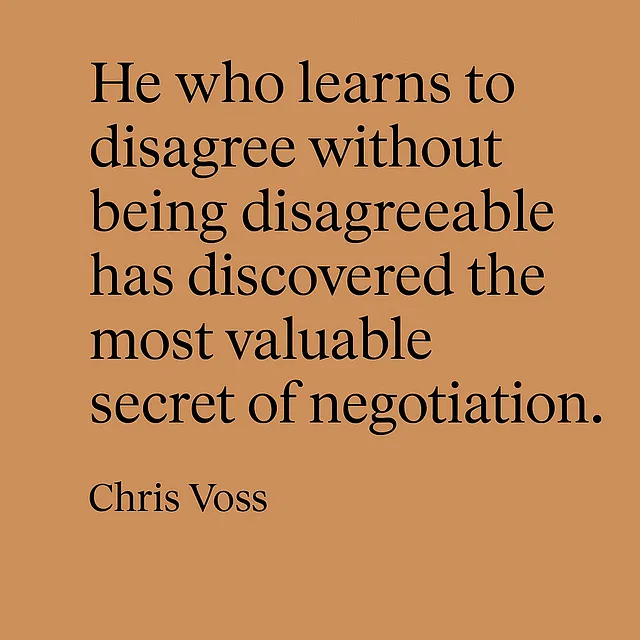
“In negotiation, the most emotionally stable person usually wins.”
— Chris Voss, Never Split the Difference

🧠 Emotions Drive Logic

We like to think our buyers are logical. But neuroscience disagrees.

All decisions — even B2B — are made emotionally first. Logic just justifies what emotions want.

So when you panic, react defensively, or rush into justifying, you trigger:

  • Distrust
  • Desperation
  • Discount requests

But when you stay calm, pause, and smile — You give the buyer space to explain, self-correct, and even come back to your side.

A Story from My Early Years

I was 3 months into my first job and a large B2B sales opportunity appears.
We had done 4 meetings, 2 solution walk-throughs, and a full proposal. All set for the Purchase order. I was on seventh cloud, still ninth cloud is two steps above.

On the final review call, the client said:

“Frankly, we love what you’re offering. But your price is almost 30% above the other vendor. You’ll need to match it.”

All I did was that I offered 30% discount, and later on, this deal was a mental and loss making venture. Total waste of time and image across the sales and finance teams.

Today, if I am put in same spot, I will handle it differently

Get Saurabh Chauhan’s stories in your inbox
Join Medium for free to get updates from this writer.

Enter your email
Subscribe

I will take a deep breath. I will smil. And I will say:

“Thank you for saying that openly. Can I ask — what’s the risk to you if you choose based on price alone?”

Silence.
Then the CIO spoke.

“Honestly? If implementation fails, we’ll be blamed. And your approach seems more accountable.”

We didn’t match the competitor.
We got the deal.

🧘 Calm Isn’t Passive — It’s Powerful

Remaining calm:

  • Slows the moment down
  • Gives space for truths to emerge
  • Shows confidence and control

“The moment you look like you’re trying to win, you’ve already lost the frame.”
— William Ury

🧭 Saurabh’s Playbook for Emotional Control

Anchor Yourself Before the Call
Ask: “What’s the worst that can happen today?” Accept it. You’re free.

Pause Before Responding
Count to 3 in your head before speaking — especially when challenged.

Turn Pressure into Questions
Replace reactions with curiosity:
“That’s an interesting view. What makes you say that?”

Smile When You Want to Defend
It disarms the buyer and resets the room.

Never Justify. Clarify.
Say: “Let me share the thinking behind that approach.” Not: “Here’s why we did it…”

Closing Thought:

The most dangerous thing you can do in a negotiation is react fast.
The most powerful thing? Stay calm and listen slower.

Because when you stay calm —
They trust you.
They talk more.
And you win without needing to win.

“Negotiation is less about the right answers and more about emotional presence.”
— Saurabh Chauhan

Drop your wisdom and let people learn from your experiences.

Categories
Uncategorized

Don’t Chase. Qualify: The Mindset Shift that Saves Time and Wins Bigger Deals

You are not obligated to follow up with someone just because they replied once. Qualification is not a courtesy—it’s your filter.
— Saurabh Chauhan

Salespeople waste more deals chasing wrong-fit prospects than they lose to competition.

We’ve all been there:
The lead looks shiny. The company is big. The conversation seems warm.
But three weeks later, you’re still following up, still hoping, still chasing.

Here’s the truth:

“Not every buyer deserves your time. Qualify hard. Disqualify fast.”
— Ken Krogue, InsideSales.com

✅ What is Qualification, Really?

It’s not a checklist. It’s a mindset.

You’re not trying to convince. You’re trying to understand:

  • Is there a real problem you can solve?
  • Is there real urgency to solve it?
  • Are you speaking to someone with real influence or budget?

❌ Why Chasing Kills Sales Performance

  • You train the prospect to see you as desperate.
  • You lose focus on better-fit opportunities.
  • You drain energy and build false pipeline confidence.

“Chasing is emotional. Qualification is strategic.”
— Anthony Iannarino, Eat Their Lunch

🎯 Qualification in Action (The Saurabh Way)

Before I invest hours into discovery, demos, or proposals, I ask:

  • “What happens if we don’t solve this in the next 30 days?”
  • “What’s your typical budget range for solving this kind of problem?”
  • “Who else will be involved in deciding whether to move forward?”

If answers are vague, non-committal, or overly future-oriented, I lean out.

If I hear urgency, clarity, or a request for the next step—I lean in.

🛠️ Qualification ≠ Interrogation

Your tone matters. It’s not about grilling the prospect.

It’s about helping them realize for themselves whether this is the right time, right solution, and right fit.

As Neil Rackham points out in SPIN Selling, “The best salespeople uncover implicit needs before the customer even recognizes them.”

Ask questions like, “What is the single biggest challenge you’re facing today?”

Use open-ended questions.
Mix SPIN and BANT.
But most of all—watch their intent. Intention is almost immediately visible. no matter how matter anyone hides them.

🧘‍♂️ Don’t Be Afraid to Walk Away

If they can’t commit to the next step, you can’t commit time.

Say:

“Let’s reconnect once this becomes a priority on your side. I want to respect your time and mine.”

It positions you as credible, not clingy.

🧠 Final Thought:

Don’t chase deals. Chase clarity.
Your pipeline should feel like a priority list, not a hope list.

“Chasing is what amateurs do when they don’t believe they can qualify like professionals.”
— Saurabh Chauhan